What automotive smart keys actually are
An automotive smart key (proximity fob / push-start key) is a wireless device paired to a specific vehicle’s immobilizer module. The fob continuously emits a low-frequency radio signal that the vehicle’s antenna detects when the fob is in proximity (typically 3-10 feet). When the driver pushes the start button, the vehicle’s computer verifies the fob’s encrypted credential before allowing the engine to start.
The system architecture: a small battery-powered transponder inside the plastic key housing, an RFID/LF receiver antenna array distributed around the vehicle, and an immobilizer computer that handles the encryption challenge-response. Each fob carries a unique cryptographic key that the vehicle’s immobilizer has pre-registered. If the cryptographic exchange doesn’t verify, the vehicle won’t start — regardless of whether the physical key blade (if present) fits the lock.
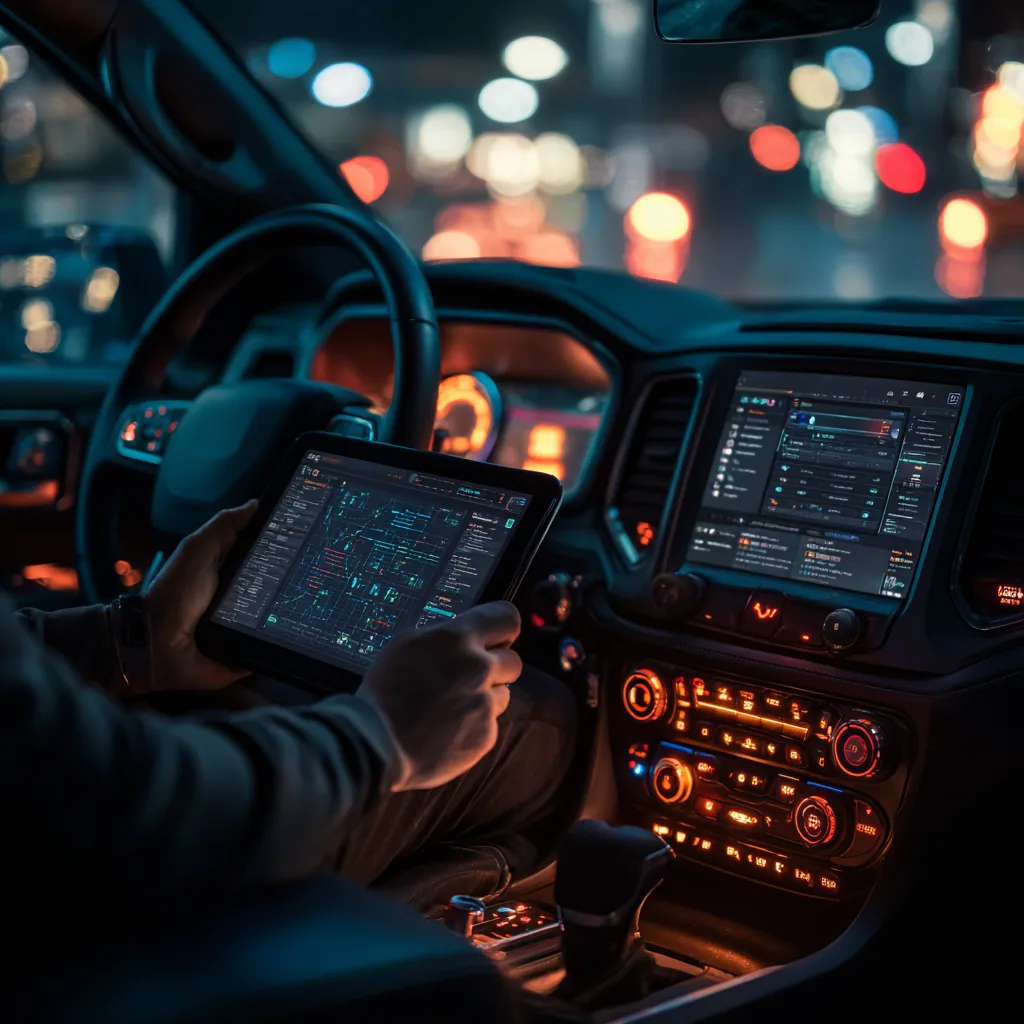
Programming an automotive smart key means pairing a new fob’s cryptographic credential to the vehicle’s immobilizer. This is done through the vehicle’s OBD-II diagnostic port using manufacturer-specific software (or for higher-security vehicles, via direct module-level programming using BENCH/BOOT mode tools). For post-2010 vehicles, programming requires the locksmith to hold NASTF VSP credentials to legitimately request the OEM-secured key data.
Toolset: Autel IM608 / IM508 (current dominant aftermarket diagnostic), AVDI (Abrites Vehicle Diagnostic Interface — premium tool for European luxury), Xhorse VVDI Key Tools (specialized for BMW, Mercedes-Benz, etc.), CGDI BMW/Mercedes (specific to those makes). The combined retail cost of a competitive automotive smart-key toolkit runs $20,000-$40,000+.
What residential smart locks actually are
A residential smart lock is a Wi-Fi or Bluetooth-enabled deadbolt or knob assembly installed on a home’s door. It replaces (or supplements) the traditional mechanical lock with electronic actuators that can be triggered by smartphone, keypad, biometric reader, or remote command via a home-automation hub.
Common product families in 2026: Schlage Encode (Wi-Fi-native deadbolt, integrates with Amazon Key, Ring), Yale Assure (Wi-Fi or Z-Wave, paired with smart-home hubs), August Wi-Fi Smart Lock (retrofit over existing deadbolt), Kwikset Halo (Wi-Fi-native with auto-lock), Level Lock (invisible smart lock inside the deadbolt housing). Each integrates with consumer ecosystems — Apple Home, Google Home, Alexa, Samsung SmartThings.
Installation: physical mounting on the door (often replacing an existing deadbolt with backset measurements and door thickness compatibility), electrical setup (battery installation, occasional hardwiring), connectivity (Wi-Fi network credentials, app pairing, user-account setup), and home-automation integration (linking to Apple Home / Google Home / Alexa). The work is part lock installation, part home-network engineering.
Toolset: standard residential lock-installation tools (drill, hole saws, level, screw bits) plus a smartphone for app-based setup. The diagnostic toolset that defines automotive locksmithing is irrelevant here — residential smart-lock issues are typically resolved through firmware updates, app re-pairing, or product replacement under warranty, not OBD-II diagnostic equipment.
Security framework: Per NIST cybersecurity guidance for IoT devices and NIST IR 8259A IoT device cybersecurity capability baseline, residential smart locks are subject to the same cybersecurity considerations as other consumer IoT — software update lifecycle, secure remote-management protocols, factory-default credential hygiene. The trade has had to grow into these considerations because they didn’t exist for traditional mechanical locks.
Why the trades are different — beyond just vocabulary
Different professional accountability. Automotive smart-key work routes through NASTF VSP (for OEM-secure data access) and ALOA-MAL (for trade competency). Residential smart-lock work routes through ALOA-CML (for general residential/commercial locksmith certification), plus increasingly through manufacturer-specific certifications for smart-home installers (Schlage Pro Installer, Yale Approved Installer, etc.).
Different security model. Automotive smart keys use challenge-response cryptography pre-loaded in vehicle ECUs at the factory — the security primitive is "this fob is paired to this vehicle, full stop." Residential smart locks use rotating credentials and revocable user grants — the security primitive is "this user has access until I revoke it." Conceptually different problems.
Different failure modes. An automotive smart-key failure looks like “car won’t start, fob not recognized” — a programming or hardware issue resolvable by an automotive locksmith. A residential smart-lock failure looks like “lock doesn’t respond to app, can’t unlock with phone, but mechanical key still works” — a network/firmware issue typically resolvable by the homeowner with manufacturer support, or in worst case requiring product replacement.
Different installation friction. Automotive smart keys come pre-encoded at the OEM and just need to be paired to the specific vehicle — no installation in the mechanical sense. Residential smart locks require physical installation on a door, electrical setup, and network configuration — a 30-90 minute job that requires familiarity with home-network architecture.
Different continuing education. An automotive locksmith stays current on new vehicle model years, immobilizer changes, and aftermarket tool updates. A residential smart-lock specialist stays current on smart-home protocol changes (Matter, Thread, Wi-Fi standards), manufacturer product launches, and integration with home-automation ecosystems. The two knowledge bases barely overlap.
When you need an automotive smart-key specialist
Lost or damaged push-start key fob. Your 2018 Honda Pilot proximity key stopped working, or you lost it entirely. You need a new fob programmed to the vehicle’s immobilizer. Mobile automotive locksmith.
Want a spare smart key. You have one working key and want a backup. Cheaper than the dealer, on-site in 30-60 minutes for mainstream brands. Mobile automotive locksmith.
All-keys-lost on a push-start vehicle. You’ve lost every key to the vehicle. The locksmith originates a new fob from the VIN and programs it via the vehicle’s immobilizer module — usually involving an EEPROM reset or similar workflow. Mobile automotive locksmith (NASTF VSP credential required for most post-2010 vehicles).
Fob works but vehicle doesn’t recognize it intermittently. Often a battery issue (cheap fix), sometimes a fob antenna issue, occasionally an immobilizer-side issue requiring diagnostic work. Mobile automotive locksmith with diagnostic tooling.
BMW Display Key, Mercedes-Benz Multi-Function Key, or other high-end fob features stopped working. Specialized automotive smart-key work — confirm Tier 3 capability before committing. Mobile automotive locksmith (Tier 3 specialist).
When you need a residential smart-lock specialist
Installing a new Wi-Fi-enabled smart lock on your home’s front door. Schlage Encode, Yale Assure, August, Kwikset Halo — these are residential products and require residential installation expertise. Residential locksmith or smart-home installer.
Smart lock won’t connect to Wi-Fi or pair to your phone. Network configuration issue — typically resolvable through manufacturer support and home-network troubleshooting. Sometimes a residential smart-home installer can help; often the homeowner solves it directly via the manufacturer’s app and support docs.
Want to integrate smart locks into a home-automation system (Apple Home, Google Home, Alexa). Smart-home installer or higher-end residential locksmith with home-automation certifications.
Need to rekey a traditional residential deadbolt or upgrade to a higher BHMA grade. Residential locksmith. Unrelated to smart-lock work specifically — it’s traditional residential locksmith work.
Want to bridge between mechanical key access and electronic access (smart deadbolt that also accepts traditional key). Residential locksmith with smart-lock product familiarity. Many homeowners want both — a smart lock for daily convenience, traditional key as backup for power outages or device failures.
Common confusions and the right path forward
Confusion 1: "I need a smart key replacement." Almost always means automotive smart key. Residential smart-lock customers don’t typically say “smart key” — they say “smart lock,” “Wi-Fi deadbolt,” or use the brand name (Schlage Encode, etc.). If you say “smart key,” you almost certainly want an automotive specialist.
Confusion 2: "I need someone to install a smart lock." Means residential smart lock. Automotive smart keys aren’t installed in the residential sense — they’re programmed/paired electronically through the vehicle’s diagnostic port. Residential smart locks are physically installed on a door.
Confusion 3: Searching “smart locksmith Grand Prairie” and getting mixed results. Search engines have trouble disambiguating automotive vs. residential intent when the search query is generic. Adding specificity helps: “automotive smart key” vs. “residential smart lock” produces clearer search results.
Confusion 4: A locksmith claiming to do “both smart key and smart lock” expertly. Operators who do both at a high tier are rare. Smart-key work and smart-lock work require different toolsets, different continuing education paths, and different credentials. Operators specializing in both at the highest level usually run multi-technician operations where different specialists handle different work. A single technician claiming top-tier capability in both deserves additional vetting.
The right path forward: declare the intent, find the matching specialist. If your problem involves a car, find an ALOA-MAL automotive specialist. If your problem involves a house, find an ALOA-CML residential specialist (with smart-home certification if installing IoT-enabled locks). The 30 seconds of clarification at the start of your search saves hours of friction later.
A Real-World Example
Operator: A Grand Prairie homeowner who searched "smart lock installation Grand Prairie" expecting help with a Schlage Encode deadbolt for their front door, but their actual problem was a non-working 2019 Lexus RX 350 smart-key fob.
Before:
- Customer’s actual situation: 2019 Lexus RX 350 smart-key fob suddenly stopped triggering the push-start system. Car still works with the spare fob.
- Customer searched "smart lock Grand Prairie" hoping to find someone to "fix the smart lock on my Lexus."
- Result: confusion. First locksmith called was a residential smart-lock installer who didn’t do automotive work. Second was a generalist who tried to quote but didn’t have automotive diagnostic tooling.
- Total time lost to mismatched specialists: ~90 minutes of phone calls and unproductive site visits.
What changed:
Customer clarified the problem — the issue wasn’t with a home lock at all; it was with the Lexus smart key. Searched again specifically for "automotive smart key Grand Prairie" or "Lexus smart key programming." Found a mobile automotive locksmith with Tier 2 capability and Lexus experience.
Results:
- Mobile automotive locksmith arrived in 35 minutes with Autel IM608 diagnostic tooling
- Diagnosed the non-working fob: dead transponder battery + de-paired from immobilizer (had to be reprogrammed after a previous dealer visit accidentally de-registered it)
- Replaced battery, re-paired both fobs to the immobilizer, verified push-start functionality
- Total time on-site: 40 minutes. Total cost: $145 (much less than the $385 quote the customer was preparing to get from Lexus service department)
Net: The 90 minutes lost to mismatched specialists could have been saved by clearer initial framing. Pattern is common — automotive smart-key issues searched as "smart lock" or "smart key" without the automotive qualifier produces mismatched results. Recommendation: add "automotive" or "car" to the search query when the issue is with a vehicle. The disambiguation pays off in finding the right specialist on the first try.
What Experts Say
“The terminology gap costs customers more than they realize. Someone searching "smart key locksmith near me" can end up at a residential smart-lock specialist who has no automotive diagnostic equipment, or at a generalist who quotes but can't complete the work. The trade should do better at disambiguation — but the practical fix is just to add the word "automotive" or "car" to the search when the problem is with a vehicle.”
Per the ALOA certification taxonomy, automotive (MAL) and residential/commercial (CML) tracks are distinct from the entry level upward. The trade body itself separates these as different specialties. Customers benefit from matching the specialist to the problem rather than treating "locksmith" as a single skill set — consistent with first-call-resolution research across service industries.
Frequently Asked Questions
Do you do residential smart lock installation?
No. We’re an automotive-only mobile locksmith. For Schlage Encode, Yale Assure, August, Kwikset Halo, or other residential smart lock installation, you want a residential locksmith or smart-home installer. The <a href="https://www.aloa.org/" target="_blank" rel="noopener">ALOA member directory</a> can help you find one in Grand Prairie. We can program your car’s smart key fob, though — that’s our specialty.
My car smart key stopped working — is the battery the issue?
Often yes. The transponder fob battery (usually a CR2032 or CR2025 button-cell) typically lasts 2-4 years. A dead battery is the most common cause of a smart key that suddenly stops working — and it’s a $5 fix at most retailers. If a fresh battery doesn’t solve it, the fob may have de-paired from the immobilizer (sometimes happens after dealer service visits) and need reprogramming. That’s where a mobile automotive locksmith helps.
Can I program my own car smart key with a YouTube tutorial?
Generally no for post-2010 vehicles. Older vehicles (mainstream 2000-2008 models) sometimes have self-programming workflows documented in the owner’s manual — usually involving turning the ignition key in a specific sequence. Modern vehicles require OBD-II diagnostic equipment + manufacturer-specific software + (for many makes) NASTF VSP credentials. The YouTube tutorials for “DIY smart key programming” mostly apply to vehicles 15+ years old.
How is a smart key different from a regular transponder key?
A traditional transponder key still has a metal blade that physically fits the ignition lock; the chip in the plastic head is read by the immobilizer when the key is inserted. A smart key has no metal blade in the ignition — it communicates wirelessly via proximity sensors, and the driver pushes a start button. Smart keys are more complex to program because they carry more sophisticated encryption.
My smart lock at home stopped working with my phone — what should I do?
Try the manufacturer’s troubleshooting flow first — most residential smart-lock issues are network connectivity, app authentication, or firmware update problems that the manufacturer can walk you through remotely. If the manufacturer support can’t resolve it, call a residential locksmith with smart-home installer credentials. We can’t help with residential smart locks — different trade.
Is one smart-key brand harder to program than another?
Yes — meaningful variance. Mainstream domestic (Ford, GM, Stellantis) and Asian (Toyota, Honda, Hyundai, Kia) smart keys are typically straightforward. European luxury (BMW, Mercedes-Benz, Audi, Range Rover, Porsche) is significantly more complex due to module-level pairing requirements (CAS/FEM/BDC for BMW, EIS for Mercedes-Benz, BCM coding for Range Rover). Tier 3 automotive locksmiths specialize in these.
The Bottom Line
Automotive smart keys and residential smart locks are different products with different specialists. If your problem is with a car key or fob, find a mobile automotive locksmith (ALOA-MAL + NASTF VSP credentials). If your problem is with a home smart lock (Schlage, Yale, August, Kwikset), find a residential locksmith or smart-home installer. The shared “smart” vocabulary creates confusion — the practical fix is to add “automotive” or “residential” to your search.
Next Steps
If you need help with an automotive smart key in Grand Prairie — programming, replacement, all-keys-lost — see our smart key programming page and push-start key replacement page. Call (214) 949-1847 with your vehicle year/make/model for a quote. For residential smart-lock work, check the ALOA member directory for a Grand Prairie residential specialist.