The four most common fleet-key scenarios in DFW
Scenario 1 — Used-car dealer lot audit. A dealer with 50-300 vehicles on the lot has, in practice, a continuous low-level rate of missing keys. Trade-ins arrive with one of two keys (or none). Test drives misplace fobs. Inventory shuffles between locations move keys to the wrong cars. A scheduled mobile lot audit — typically monthly or quarterly — identifies the gaps and originates replacement keys on-site without moving the vehicle. The audit also produces a documented key-presence record for each VIN, which matters for insurance and accreditation. We’ve worked with DFW dealers where the first audit found 8-15% of inventory was missing at least one key.
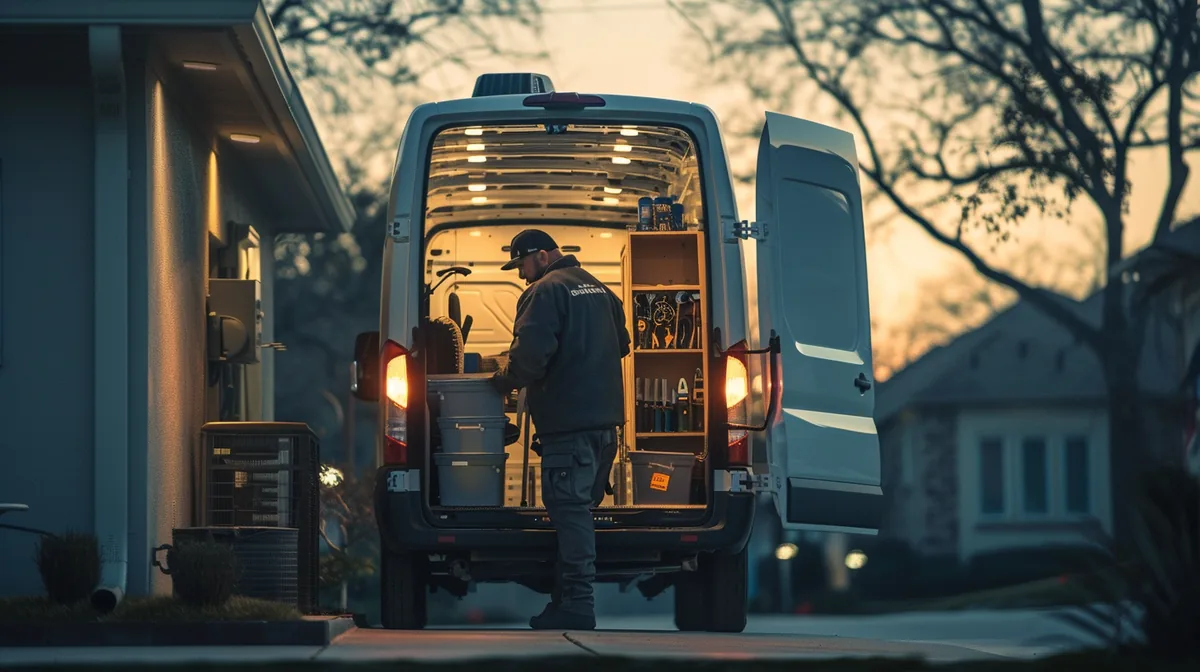
Scenario 2 — Service-vehicle fleet (HVAC, plumbing, delivery, contractor, etc.). A 20-40 truck service operation typically has driver-assigned vehicles where the key situation is stable, plus a smaller pool of shared/reserve vehicles where keys go missing more often. Replacement workflow is the operational issue: when a tech loses a fob on a Tuesday job site, the cost of pulling the truck out of service overnight to take it to a dealer is much higher than the cost of a same-day mobile replacement.
Scenario 3 — Rental fleet. Daily-rental operations have a different problem: high turnover, multiple drivers per vehicle, and a per-rental cost-of-key-loss insurance overhead. Volume mobile-locksmith programs can replace keys at the rental return point rather than requiring vehicles to be transported out of service.
Scenario 4 — Corporate vehicle pool. Large corporate operations (utilities, energy, municipal, defense contractors) maintain pool vehicles checked out to employees. Key management here is more like a master-key system from residential — but the locks are vehicle immobilizers, not pin tumblers, so the work is automotive. Often involves customized procedures for security clearance compliance.
What a commercial fleet auto key program looks like
A fleet program isn’t fundamentally different from individual-vehicle service — it’s the same key cutting, programming, and origination work done at scale with administrative wrapping. The key differences from a one-off service call:
Volume pricing. A fleet rate-card is typically 15-30% below the per-key price an individual driver pays, in exchange for committed volume (typically 25+ keys/year). The exact discount depends on the mix — high-volume mainstream brands (Ford fleet trucks, Toyota commercial vans) tend to price lower than mixed European luxury inventories.
Scheduled audits. Monthly or quarterly on-site visits where the locksmith works through a documented inventory list, identifying missing keys and originating replacements. Output is a written audit record per VIN — useful for insurance, accreditation (NIADA for used-car dealers), and operational visibility.
Dispatch SLA for missing-key emergencies. Most fleet programs offer a same-day or next-business-day dispatch commitment for individual-key emergencies (a driver loses a fob on Tuesday — by end of day Wednesday, replacement is on the vehicle). The SLA is real but priced — it’s a value-add for high-uptime fleets.
NASTF VSP access for all vehicles in the fleet. Per NASTF’s VSP registry program, originating new keys for post-2010 vehicles legitimately requires VSP credentials. A fleet program where the locksmith holds VSP across the major OEM portals covers the entire fleet without manufacturer-specific friction.
Documentation and reporting. Each service call produces a record: VIN, work performed, key type, before/after key count for that vehicle, signed-off completion. The reporting is what differentiates a fleet program from a series of one-off calls.
Pricing benchmarks for DFW fleet auto key programs
Realistic 2026 pricing for fleet auto key programs in the Grand Prairie / DFW area, based on typical mid-volume operations (50-200 vehicle accounts). Per-key replacement pricing is typically lower than retail; setup fees and SLA premiums are typically charged separately.
Per-key replacement (volume rate). Routine transponder key for mainstream domestic/Asian: $95-$135 vs. $150-$300 retail. Smart key / proximity fob for mainstream push-start: $185-$295 vs. $250-$500 retail. European luxury smart key (BMW, Mercedes-Benz): $345-$575 vs. $450-$900+ retail. All-keys-lost origination adds typically $60-$120 to the base price across categories.
Scheduled lot-audit fee. Monthly audit for a 50-vehicle dealer lot: $200-$400 per visit (covers technician on-site time, written documentation). Per-key originated during audit charged at fleet volume rate. Most dealers find the audit pays for itself within 1-2 missing-key recoveries.
Same-day dispatch SLA. Typically a $50-$150 surcharge over volume rate, or bundled into a monthly retainer for high-uptime fleets. The economics: a service truck out-of-service for 24 hours typically costs the operator $200-$600 in lost revenue plus dispatcher friction. A same-day SLA at $100 surcharge is net-positive.
Setup and onboarding. One-time. Typically $200-$500 for VIN inventory ingestion, key-type cataloging per vehicle, and account setup. Recovered across the first 4-6 service calls.
Per BLS OEWS occupation data, locksmith trade pricing varies regionally. DFW pricing is broadly in line with major-metro automotive locksmith rates — slightly below West Coast and Northeast metro pricing, slightly above secondary-market pricing.
Used-car dealer lot audits — the most common DFW fleet use case
The DFW used-car dealer market is one of the largest in the country, with several hundred independent and franchised used-car lots concentrated along the I-30, I-20, and I-35 corridors. Used-car inventory has a structural key-management problem: vehicles arrive with incomplete keys (trade-ins rarely come with both keys), test drives misplace keys, and lot moves between locations create gaps.
A monthly lot audit by a NASTF VSP-credentialed mobile locksmith addresses this systematically. The technician arrives with a printed inventory list (or works from the dealer’s DMS export). For each vehicle: confirm the keys present, note any missing, originate replacements on-site for vehicles where ownership is documented. The audit usually completes 30-60 vehicles per technician-day depending on complexity (newer European inventory is slower than older domestic).
Documentation outputs to expect: a per-VIN line for each vehicle showing keys-before, keys-after, work performed, and technician sign-off. For dealers pursuing NIADA accreditation or other quality-assurance frameworks, the audit record is part of the compliance file.
Why mobile beats dealer-service for fleet work: scale economics. A used-car lot can’t afford to tow each vehicle to its respective franchise dealer for key replacement — the tow costs and dealer service-bay turnaround time would consume the unit-economics. A mobile auto locksmith handles all makes on the lot in a single visit.
NASTF VSP and why it matters for fleet work specifically
The NASTF Vehicle Security Professional registry is the gateway through which independent automotive locksmiths request OEM-secure key data — VINs, key codes, immobilizer secure data — from manufacturers. For post-2010 vehicles, especially European luxury, VSP is effectively required for legitimate origination. Manufacturers verify the VSP credential before releasing key data.
For fleet work, this matters because a fleet program needs to cover the full make-mix of the operation, not just the vehicles the locksmith handles most often. A dealer lot with BMW, Mercedes, Ford, GM, Toyota, and Honda inventory needs a VSP-credentialed locksmith who can request key data across all six OEM portals. A non-VSP locksmith might do fine on the domestic and Asian inventory but bottleneck on the European.
VSP also carries a real accountability mechanism. The registry tracks each request a locksmith makes — VIN, manufacturer, timestamp. Misuse (e.g., requesting key codes without owner authorization) can result in registration suspension. For fleet customers, this means VSP-credentialed work has a documented audit trail that satisfies insurance and security-program requirements.
How to evaluate a fleet auto key provider
The questions to ask, in roughly the order they matter:
1. Are your technicians ALOA-MAL credentialed and NASTF VSP-registered? If the answer isn’t a clear yes to both, the provider can’t legitimately handle modern fleet work end-to-end.
2. What does the per-key fleet rate look like across our actual make-mix? Get the rate card. The provider should give specific pricing tiers for your inventory composition.
3. What’s the scheduled-audit SLA and the emergency-dispatch SLA? Both should be in writing — typical audit cadence is monthly for high-volume dealers, quarterly for lower-volume operations. Emergency dispatch should commit to same-day or next-business-day for individual-key situations.
4. What documentation comes out of each visit? Per-VIN line records, audit trail, signed completion. If the provider can’t commit to written records, the program won’t serve your insurance/accreditation needs.
5. How are emergencies handled outside business hours? Not every fleet needs 24/7, but operations with after-hours dispatch (service fleets, rental returns at night) need to know the response model.
6. What’s the contract structure? Month-to-month is the modern standard. Multi-year exclusive contracts are increasingly uncommon in this trade and worth pushing back on.
A Real-World Example
Operator: A Grand Prairie used-car dealer with 85 vehicles in inventory across two lots, mixed make-and-model from $5K economy cars to $40K European luxury. Previously managed key situations on an ad-hoc basis with the closest dealership service department for each make.
Before:
- Estimated 6-10 vehicles per month had key incidents — missing trade-in keys, test-drive misplacements, lot-move gaps
- Average resolution time: 2-5 business days per vehicle (dealer service bay turnaround, plus tow if needed)
- Average cost per key resolved at dealer pricing: ~$385 across the make mix
- Annualized cost: approximately $30,000-$45,000 in key replacement plus an estimated $25,000-$50,000 in opportunity cost from unsaleable inventory waiting for keys
What changed:
Dealer engaged a NASTF VSP-credentialed mobile fleet program. First on-site audit (4 hours, 2 technicians, both lots) identified 11 vehicles with missing keys — originated all 11 on-site in the same visit. Subsequent monthly audits ran 2-3 hours and originated 5-8 keys per visit.
Results:
- Monthly audit cost: ~$1,800 (audit fee + originated keys at fleet rate)
- Annualized cost under fleet program: ~$22,000 (vs. ~$35,000+ previously, even before counting opportunity cost recovery)
- Time-on-lot improvement: vehicles ready for sale 3-5 days faster on average vs. dealer service bay turnaround
- Documented audit trail per VIN: now part of the dealer's monthly operations report and NIADA compliance file
Net: Net savings: approximately $13,000+/year on direct key replacement costs plus an estimated $20,000-$40,000 in opportunity-cost recovery from faster time-to-sale. Total program ROI: roughly 2-3x the program fee within 12 months. Pattern documented across NIADA dealer-management best practices.
What Experts Say
“The dealer lots that run a structured monthly audit have a measurably different ops profile than the ones that don't. The audit lots have lower carry time per unit, fewer surprises at sale, and a documented inventory state that insurance underwriters and accreditation bodies actually look at. The lots without an audit pay the same costs in slow motion — they just don't see them as a line item.”
Per NIADA’s dealer operations guidance and NASTF VSP credentialing standards, scheduled inventory key audits are a recognized best practice for used-car operators above roughly 30 vehicles in standing inventory. The pattern compounds — operators who run structured audits typically see 3-7% inventory-velocity improvement within 6 months of program adoption.
Frequently Asked Questions
What’s the minimum fleet size that justifies a structured program?
Roughly 25-30 vehicles is the threshold where a scheduled-audit + volume-rate program starts to outperform ad-hoc per-incident pricing. Below that, individual service calls at retail rates can be cost-competitive. Above 50 vehicles, the program economics get materially better. The exact threshold depends on the vehicle mix and turnover rate.
Can a fleet program cover multiple locations across DFW?
Yes. Most mobile fleet programs in DFW serve multi-location operations — a dealer with lots in Grand Prairie and Arlington, or a service fleet with depots in Irving and Dallas. Routing logistics add some overhead but don’t change the per-key economics materially. Confirm coverage area when scoping.
How fast can you originate a key on an unusual European vehicle (Range Rover, Maserati, Bentley)?
For NASTF VSP-credentialed operators with the right tooling (Autel IM608 Pro, AVDI, Xhorse VVDI BMW/MB tools), most modern European luxury vehicles are 60-150 minutes on-site for all-keys-lost. Unusual or low-volume models (Maserati, Bentley, McLaren) may require manufacturer-specific equipment that not every fleet program carries — ask specifically about your make-mix.
Do you handle commercial-vehicle keys (box trucks, dump trucks, semis)?
Most commercial-vehicle key work uses the same automotive workflows as passenger vehicles — same diagnostic equipment, same NASTF VSP credential path. Heavy commercial (semis, fire trucks, etc.) may use proprietary OEM systems (PACCAR, Freightliner, Volvo trucks) that require specialized equipment. Confirm with your provider before committing to coverage scope.
What happens if a fleet program tech finds a vehicle with no proof of ownership?
Reputable VSP-credentialed locksmiths decline to originate keys for vehicles where ownership can’t be documented. This is a theft-prevention guardrail built into the NASTF VSP framework. For fleet customers, providing the dealer DMS / fleet inventory list at audit time establishes ownership documentation upfront for the entire fleet.
Can we get a custom SLA for our specific operation?
Yes — fleet programs are configurable. Common variations: 4-hour response SLA for critical service-vehicle fleets, after-hours dispatch for rental return locations, weekend coverage for dealer event sales. Each adds cost but is normal in the trade. Negotiate the SLA structure that fits your actual operational tempo.
The Bottom Line
For DFW businesses operating vehicle fleets at scale, a structured commercial fleet auto key program with a NASTF VSP-credentialed mobile locksmith delivers meaningful cost savings (15-30% on per-key replacement), faster vehicle availability (same-day vs. multi-day dealer turnaround), and documented audit trails for insurance and accreditation. The threshold where program economics start beating ad-hoc service is roughly 25-30 vehicles. For used-car dealers specifically, the program ROI typically runs 2-3x within 12 months of adoption.
Next Steps
For fleet auto key program inquiries in the Grand Prairie / DFW area, call (214) 949-1847 or contact us with your fleet size, location(s), and make-mix. We’ll quote a fleet rate card and audit schedule tailored to your operation. For individual-vehicle service, see our car key replacement page.